
GOVERNMENT WATCH // SEPTEMBER 5, 2026
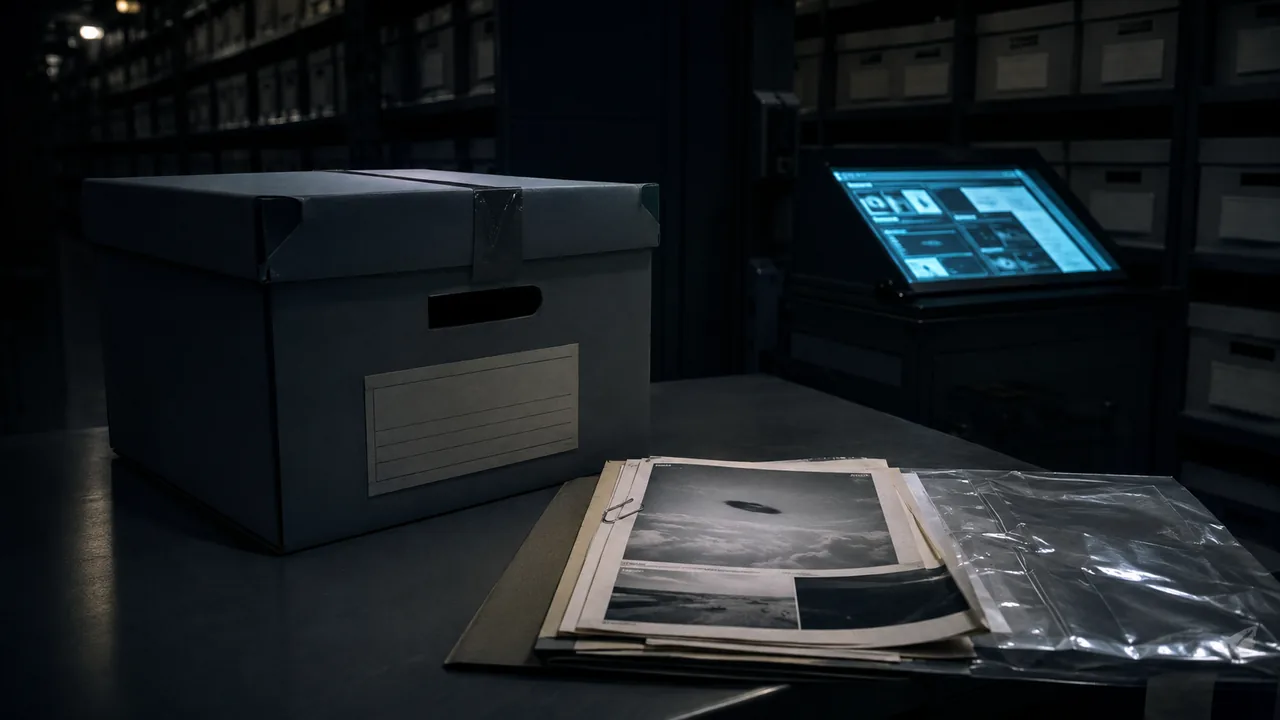
The National Archives now lists the Department of the Air Force among the agencies represented in Record Group 615, the statutory Unidentified Anomalous Phenomena Records Collection. Its catalog identifier is 656595571. That is a concrete transparency milestone: researchers now have a formal archival series and provenance trail to inspect.
What the listing establishes
NARA says Record Group 615 consists of UAP-related records received from federal agencies under the 2024 National Defense Authorization Act. The Air Force joins the FAA, Nuclear Regulatory Commission, Office of the Director of National Intelligence, Office of the Secretary of Defense, National Security Agency, State Department, and FBI. NARA also says transfers and online additions will continue on a rolling basis.
The important fact is custody. An agency series in the National Archives establishes that records were transferred into the collection and gives researchers a stable catalog entry. It does not establish that every observation described in those records happened exactly as reported, remained unexplained after analysis, or involved extraordinary technology.
Access is not the same as completeness
An archival series can contain descriptions, metadata, correspondence, images, or other records with very different evidentiary value. Some digital copies may be available immediately; other descriptions may lead to material that is not yet digitized or fully searchable. Each document still needs its own source, date, chain-of-custody, and corroboration check.
What to inspect next
- Which Air Force offices created and transferred the records
- The date range, series scope, and agency-provided metadata
- Whether digital objects are native files or later reproductions
- Redactions, missing attachments, and references to unreleased records
- Connections to previously released AARO or PURSUE case files
Assessment
High confidence in the accession; case conclusions remain open. NARA’s listing materially improves documentary access and preservation. It should be treated as a map to primary evidence, not as a blanket authentication of the claims the archive contains.