RESEARCH BRIEF — OCTOBER 1, 2026
A paper published September 29 in the Journal of Scientific Exploration presents Paola Di Maio's Citizen Orb Photometry Pipeline, or COPP. It offers a structured way to extract position, apparent size, brightness and color-channel measurements from consumer recordings of luminous phenomena. Publication establishes an inspectable method; it does not identify an exotic source.
What the method contributes
The paper describes a ten-step workflow and three illustrative recordings from Taiwan, the United Kingdom and Poland. When a bright center saturates the sensor, the method measures the surrounding halo instead. This is a proposed way to keep extracting information from difficult footage.
The author's August 29 Zenodo data package supplies source videos and preliminary results for replication attempts. Its description warns that the pipeline remains unstable and under refinement. The public prototype requests observation details and offers CSV and JSON exports. UFOsoldier checked these public resources but did not independently run or validate the software.
The paper's cautions matter
The full paper acknowledges uncalibrated RGB values, possible optical contamination of halo measurements, camera motion mixed with object motion, and timing errors in variable-frame-rate video. The three-case demonstration lacks negative controls and calibrated false-positive estimates. Color similarities therefore cannot establish plasma composition.
NASA's independent UAP study separately emphasizes calibration, metadata and measurements of known objects. That provides a methodological benchmark, not an endorsement of COPP or its example cases.
The next useful test
Our assessment is that reproducibility is the most valuable promise here. An outside team should be able to retain the original file, identify the software version, repeat the settings and compare outputs with known lights filmed under similar conditions. A graph can describe pixels accurately while the interpretation of those pixels remains wrong.
For readers, the useful question is whether the same workflow handles mundane controls and unknown recordings consistently. A documented failure would also be a useful result. The present contribution is a testable analysis proposal, with its validation work still visible and unfinished.
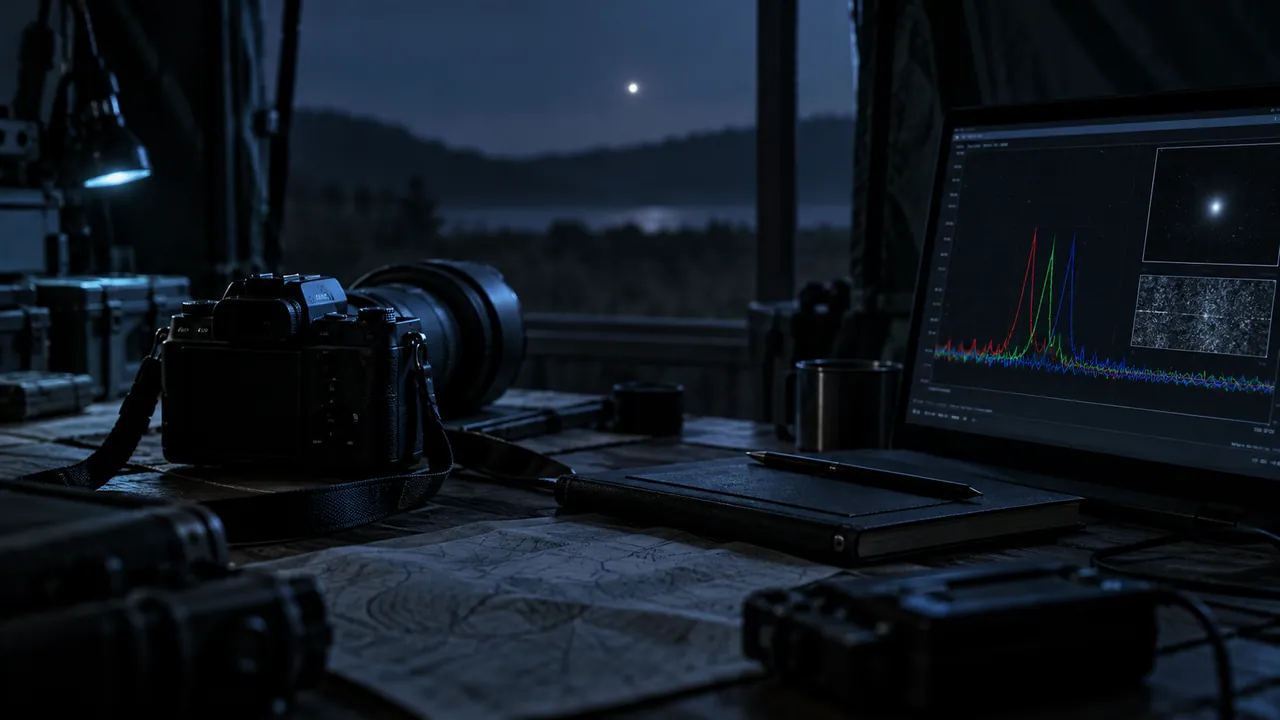
Hero image: original AI-generated editorial illustration; not documentary evidence or a photograph of the reported event.