
SCIENCE ARCHIVE REVIEW · OCTOBER 8, 2026
A peer-reviewed Galileo Project study offers a practical lesson for UAP research: establish how an instrument behaves around ordinary environmental and human activity before interpreting an unusual reading. The paper by Foteini Vervelidou and colleagues was published November 26, 2025; this is an archival methods review, not a new detection announcement.
The useful result is a tested baseline
The team operated a magnetic-field station in Colorado during April–September 2024 and compared one-second measurements with the USGS Boulder observatory. The authors report comparable data quality under the tested conditions. Controlled interference mattered: spraying a nearby electric fence produced small signals, while a steel post-driving tool produced much larger disturbances.
The paper also preserves its limitations. Some raw-data spikes remained unexplained. Temperature readings became unreliable in July, and a power interruption left a gap during the May storm. Its findings establish instrument performance and open troubleshooting questions, not a demonstrated UAP magnetic signature.
A storm is an independent control
The USGS account of May 10, 2024 independently documents an extreme G5 geomagnetic storm. It describes effects on technological systems and substantial compass-direction changes at its Alaska station. This confirms a real natural source of major magnetic variability, although it does not independently validate the Galileo team's processing.
How to investigate the next spike
UFOsoldier analysis: an anomalous reading is the start of an attribution problem. A useful event package would preserve the raw signal, exact timing, instrument settings, local maintenance log, weather and any simultaneous optical observations. Comparison with a distant reference station could help distinguish a regional disturbance from a source close to the sensor.
Coincidence also needs a test. If enough instruments and sky recordings run continuously, some changes will overlap by chance. Analysts should define the association window before selecting the most dramatic examples and report ordinary matches as well as unexplained ones.
NASA's UAP FAQ identifies inadequate high-quality data as a central obstacle. Calibration work addresses that obstacle, but sensitivity alone cannot identify what caused a signal. This review assessed the published account; it did not reprocess the underlying measurements or replicate the experiment.
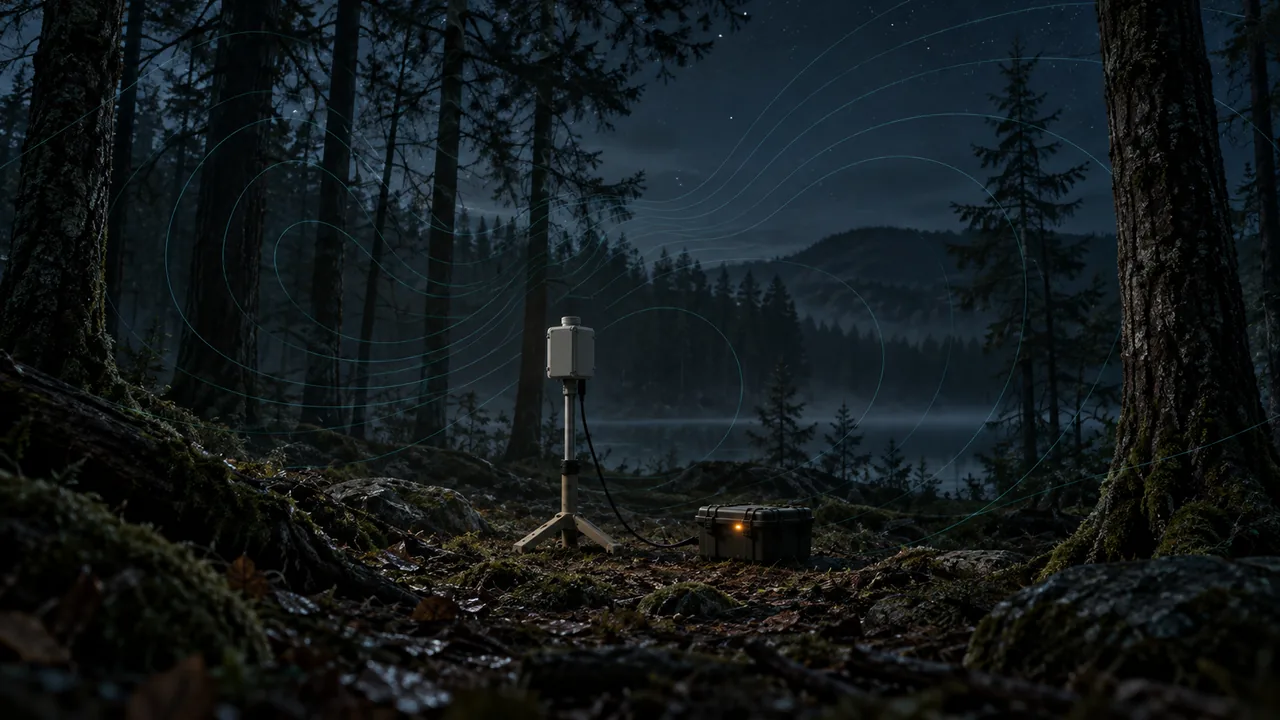
Hero image: original AI-generated editorial illustration. It depicts a concept, not evidence or a reconstruction of a reported event.