X SOURCE REVIEW — SEPTEMBER 29, 2026
Ryan Graves's September 24 post expands the discussion of astronaut UAP accounts by sharing Americans for Safe Aerospace's promotion of a Brian Binnie podcast episode. The post is an attributable public statement about a reported encounter. It does not supply independent measurements of that encounter. Read the exact Graves post.
What the source actually says
The quoted ASA announcement says Binnie described roughly a dozen luminous spheres in his backyard six days after a hard landing. It identifies Kevin Curran and Matt Stinemetze as the guests sharing his story with Graves. The stated setting matters: this is a backyard account involving a person known for spaceflight, not a report of objects seen during a space mission. Read ASA’s original announcement.
Graves adds that astronaut UAP accounts extend beyond this example. That broader assertion is his position; the post does not inventory additional incidents or provide their underlying evidence. The written posts were checked directly for this article. The attached trailer could not be played during review, and this article does not claim to have audited the full interview.
The credentials can be checked independently
The Smithsonian's National Air and Space Museum documents Binnie's October 4, 2004 SpaceShipOne flight, which reached nearly 70 miles in altitude and secured the Ansari X Prize. Its retrospective also records his death in 2022. This independently establishes the aviation context and explains why the new discussion is retrospective. The museum article does not corroborate the backyard sighting. Read the museum’s SpaceShipOne history.
That separation protects the value of testimony. Professional experience can explain why an account deserves careful attention; it cannot substitute for an event's timing, duration, viewing conditions or independent observations. Respecting a witness and testing the account are compatible tasks.
What would strengthen the record
Editorial assessment: The most useful next sources would be Binnie's earliest recorded description, its date and full context, any contemporaneous notes, and independently documented observations of the same event. Those materials would help distinguish what Binnie described from what later narrators inferred. Their absence from the reviewed posts is a limit of this source set, not proof that such material never existed.
NASA emphasizes the difficulty of drawing scientific conclusions from sparse observations. Applied here as a general standard, that supports preserving the original account and checking its details before attaching an explanation. NASA’s data-quality guidance.
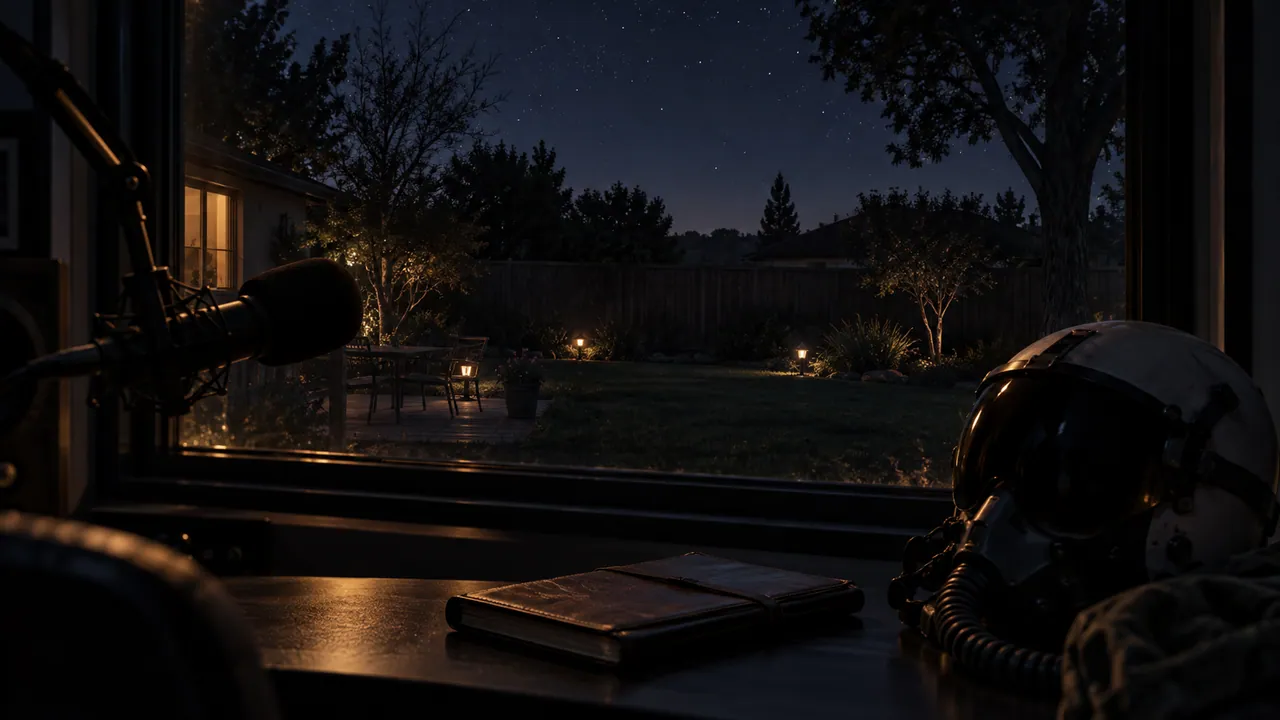
Hero image: original AI-generated editorial illustration; it is not a photograph, sensor recording, or reconstruction of the reported event.