
The Gulf of Oman case in PURSUE Release 05 is genuinely worth examining. It is also a lesson in how quickly an official record can be mistaken for complete evidence.
Verified
U.S. Central Command submitted six contemporaneous clips, DOW-UAP-PR117 through PR122, tied to a September 8, 2021 AC-130J mission. The government describes every public clip as a cellular-phone recording of an infrared sensor display—not native sensor data. That introduces lost resolution, screen flicker and other artifacts.
Claim in the report
The accompanying Intelligence Information Report, DOW-UAP-D101, calls the observations “cold orbs” about four feet wide and records estimated speeds and behavior. Those are reported assessments. The released phone videos do not independently demonstrate the size, range or velocity estimates.
Interpretation
The case may be important, but outside analysts cannot reproduce its strongest conclusions without the native EO/IR files, range information, aircraft telemetry and synchronized timestamps. A report can preserve what personnel assessed; it cannot substitute for the underlying measurements.
Speculation
Conventional objects, foreign systems, sensor or geometry effects, and genuinely unknown technology all remain possible. Nothing released establishes a nonhuman origin.
Bottom line: Release 05 verifies that the report and recordings exist. It does not give the public enough original data to verify the extraordinary performance claims.
Sources: PURSUE Release 05 portal · DVIDS PR118 record · DOW-UAP-D101
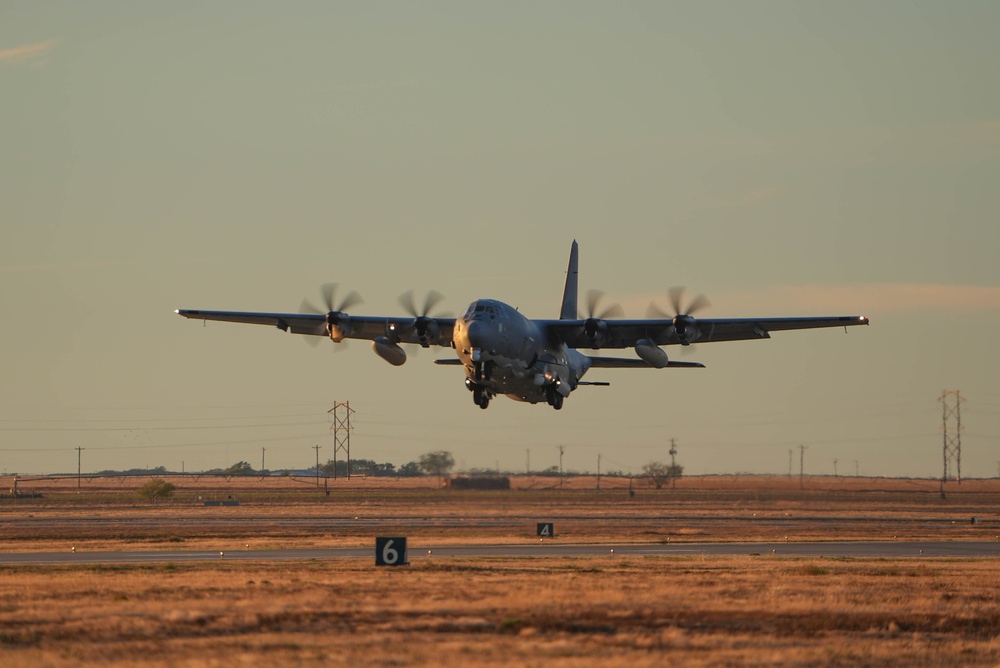
Hero credit: U.S. Air Force photo by Staff Sgt. Kevin Williams, 27th Special Operations Wing, via DVIDS. Public domain.