
SCIENCE WATCH // SEPTEMBER 24, 2026
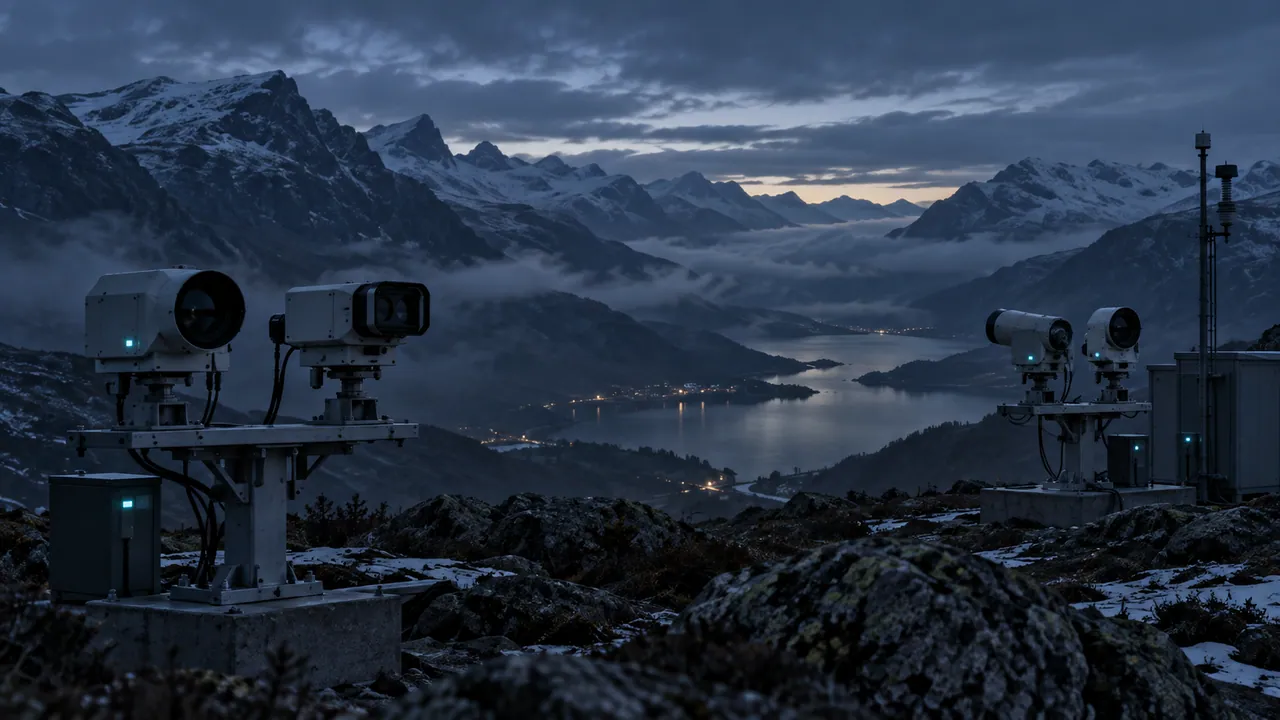
Hessdalen's latest operational update offers a concrete development for UAP research: the project says its Blue Box laboratory now has four cameras, arranged in pairs looking in the same direction to help reject noise. Its September status-meeting notice also reports that researchers from Ukraine's Zond group installed two sensor boxes in the valley, with data transmission under way and further information about the measurements expected.
A chance to see the observation process
A separate Project Hessdalen announcement advertises a public research night organized by Østfold University College on Friday, September 25. It lists a free lecture at Hovet Cultural Centre in Ålen at 18:00, followed by visitor access to the Mount Skarvan research station from 19:00 until 04:00. The announcement also describes an accessible base near Lake Øyungen, with its exact location to be announced. These are advertised arrangements, not a promise that an unexplained light will appear.
What the recent meeting contributes
A participant account in UAP Check describes the August gathering in Trondheim and Hessdalen, including presentations on cameras, data loggers, magnetometers and other instruments. The account separates instrumental work from anthropology and personal testimony. Its author, Francisco Mourão Corrêa, also participated as a speaker; the report is useful corroboration of the meeting's activities, rather than an independent scientific validation of any sighting.
The measurement questions to carry forward
UFOsoldier analysis: paired cameras can help investigators ask whether an apparent event appears in more than one recording. That does not, by itself, establish distance, physical speed or an exotic origin. A useful release would identify each sensor, its calibration and clock accuracy, the processing applied to the files, and the rules used to distinguish a candidate event from noise.
The next scientific milestone is an inspectable observation package: synchronized original recordings, environmental information, an explanation of rejected alternatives and enough methodological detail for another team to repeat the analysis. Equipment installation and public participation support that process. They should be assessed on the quality of the data they ultimately produce.
Hero: original AI-generated conceptual illustration of observation equipment; not a photograph of the Hessdalen station or an observed event.