X INTEL // AUGUST 27, 2026
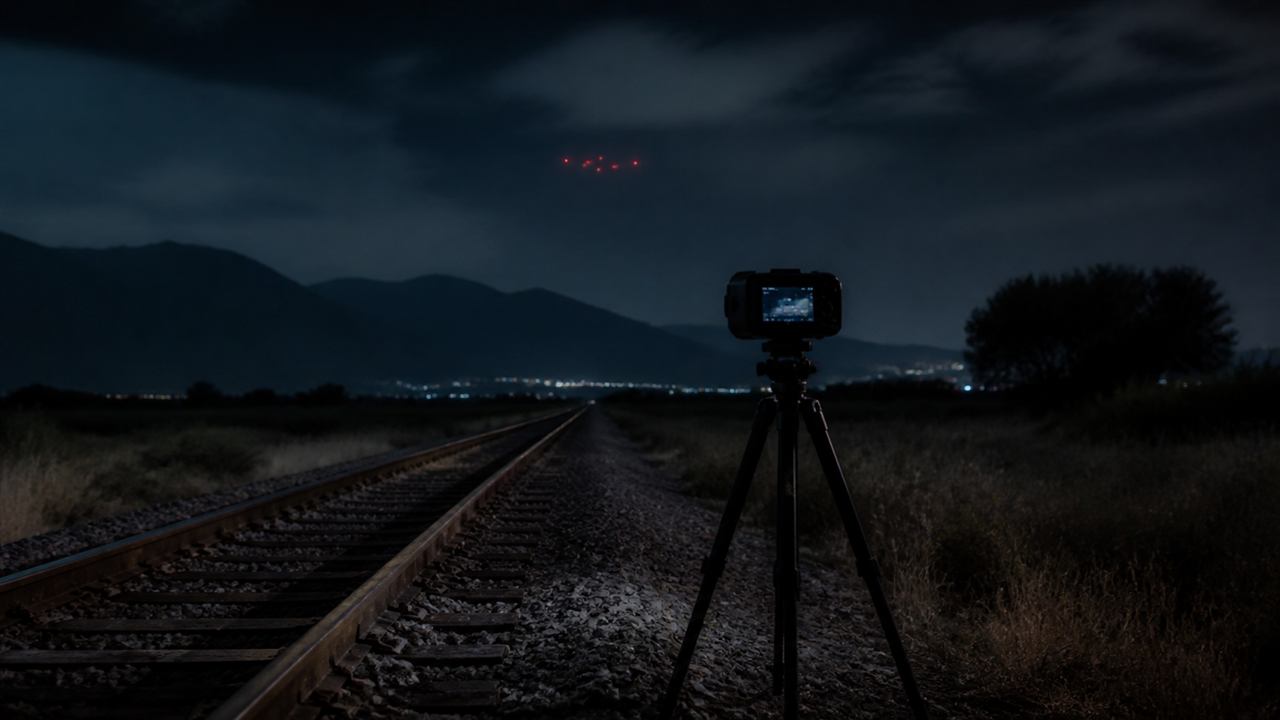
Dr. Dan posted a 25-second video described as showing a cluster of red lights filmed by a railroad worker in San Luis Potosí, Mexico. The same basic footage and account appeared in Mexican reporting earlier in August, giving the clip more provenance than a context-free repost—but still not enough information for identification.
The visible points appear, disappear, and shift in the night sky. A phone video alone cannot show whether they are close together in physical space, aligned by perspective, or changing brightness while remaining stationary. Darkness removes the reference features needed to estimate range and motion.
What local reporting adds
UnoTV and other Mexican outlets reported that the clip was attributed to a train operator at a station in San Luis Potosí. They also noted that no official explanation had been issued. That reporting supports the existence and circulation of the witness story; it does not independently verify the recording date, exact station, camera file, or extraordinary origin.
The fastest path to identification
- 🛸 Name the station or track segment and establish the exact timestamp.
- 🛸 Obtain the original phone file rather than a social-media copy.
- 🛸 Record the direction of view and identify horizon lights or terrain.
- 🛸 Check rail-yard operations, towers, aircraft, drones, lantern releases, and local events.
- 🛸 Compare weather, wind direction, and cloud height with the apparent motion.
- 🛸 Search for independent recordings from separated locations.
Red anti-collision lights can belong to aircraft, towers, cranes, or drones. Atmospheric scattering and focus changes can make distant sources pulse. Lanterns can drift together with the wind. None of those explanations should be declared without matching the event geometry, but all belong in the initial comparison set.
Do not count reposts as witnesses
The clip has traveled through multiple accounts and news summaries. That creates many copies of one evidentiary stream, not many observations. A second witness matters only if they independently recorded the same lights from a known location and time.
Assessment: Moderate confidence in the reported location and witness context because multiple local outlets carried the account. Low confidence in any identification. The case remains unresolved because the public version lacks the original file, exact geometry, and independent sensor or witness corroboration.