SCIENCE ARCHIVE REVIEW · OCTOBER 7, 2026
A disagreement in the 2022 UAP literature remains a useful example of how an extraordinary speed estimate can be tested. Ukrainian observers reported dark objects with inferred speeds reaching 15 kilometres per second. Abraham Loeb argued that objects of the stated size moving through air that quickly should have produced a conspicuous optical signature. This article revisits those published arguments; it does not announce a new detection or a settled identification.
The distance estimate comes first
In their first paper, B. E. Zhilyaev, V. N. Petukhov and V. M. Reshetnyk describe daytime cameras at two meteor stations. They distinguish luminous targets from dark ones they call phantoms. For the latter, their colourimetric method infers range from contrast against scattered skylight, using assumptions about atmospheric scattering and the object's reflectivity.
Those assumptions matter because the inferred distance determines the physical scale assigned to an angular track. The reported dark-object estimates reach distances of 10–12 kilometres and sizes of 3–12 metres. The paper also describes two-site observations of a luminous object; that is a separate measurement claim and should not be treated as independent triangulation of every dark target.
Loeb's counter-test
In his October 5, 2022 response, Loeb calculates the atmospheric interaction expected from the claimed fast, metre-scale objects. His argument is that a bow shock would make them bright rather than dark. He proposes that reducing the inferred distance by a factor of ten would reduce the associated size and transverse speed, bringing them into a range compatible with artillery shells.
This is a physical consistency argument and an alternative interpretation. It is not a recovered projectile, a radar match or a demonstrated identification of a particular camera track. Its relevance is that a hypothesis about extreme motion also predicts other observable effects.
The follow-up did not close the question
The same Ukrainian authors' November 2022 follow-up reports further observations, including additional dark-object size and speed estimates and two luminous detections attributed to two-site monitoring. The authors say they do not interpret the luminous objects. Continued claims from the same research group are not independent replication, and a later paper's existence alone does not show that the earlier objection has been resolved.
A reproducible next step
UFOsoldier's assessment is that an independent reanalysis should connect each claimed object to original timed frames, camera calibration, atmospheric conditions and a range measurement with stated uncertainty. It should test whether alternative distances reproduce the images, and whether the predicted light would have been detectable by the actual instrument.
We checked the original paper, Loeb's published calculation and the follow-up's abstract and submission record. We have not reprocessed the observational data or established the identity of the targets. The lasting value of this exchange is a question that can be tested: do the distance, speed, size and expected emissions remain consistent when the same event is examined together?
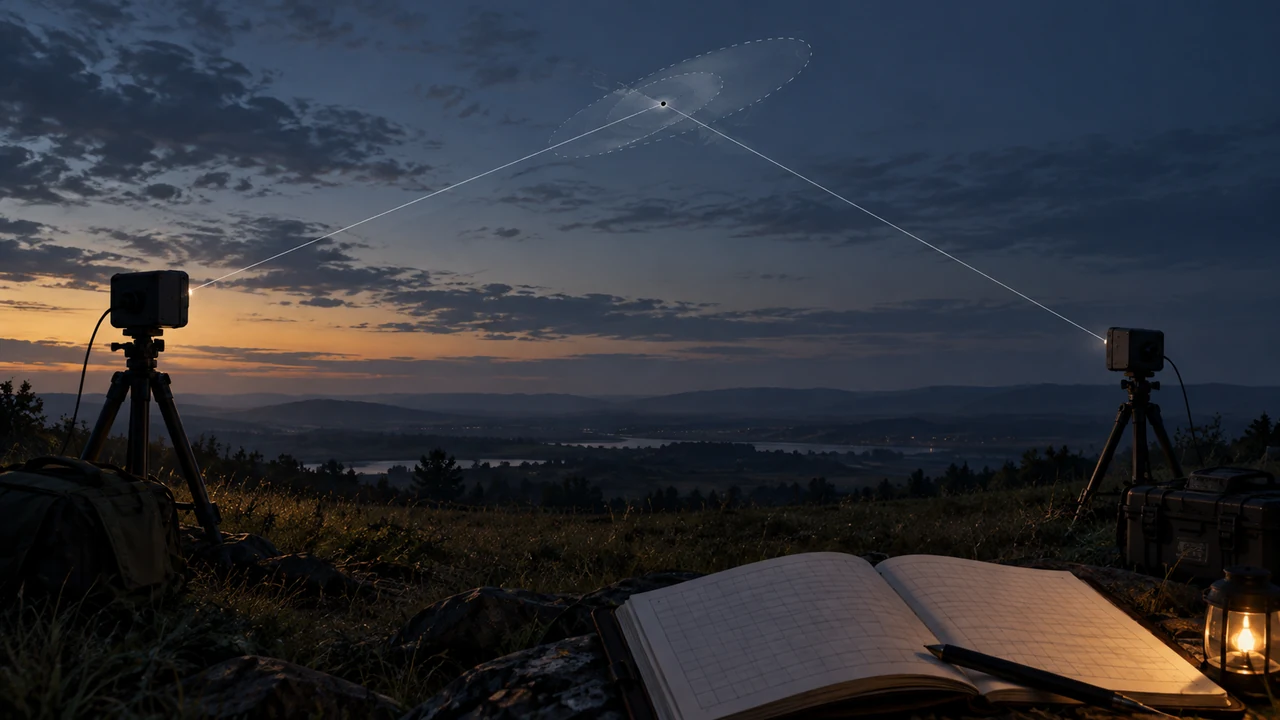
Hero image: original AI-generated editorial illustration. It is conceptual artwork, not a photograph, sensor capture, recovered document, or evidence of the reported events.