X INTEL // AUGUST 27, 2026
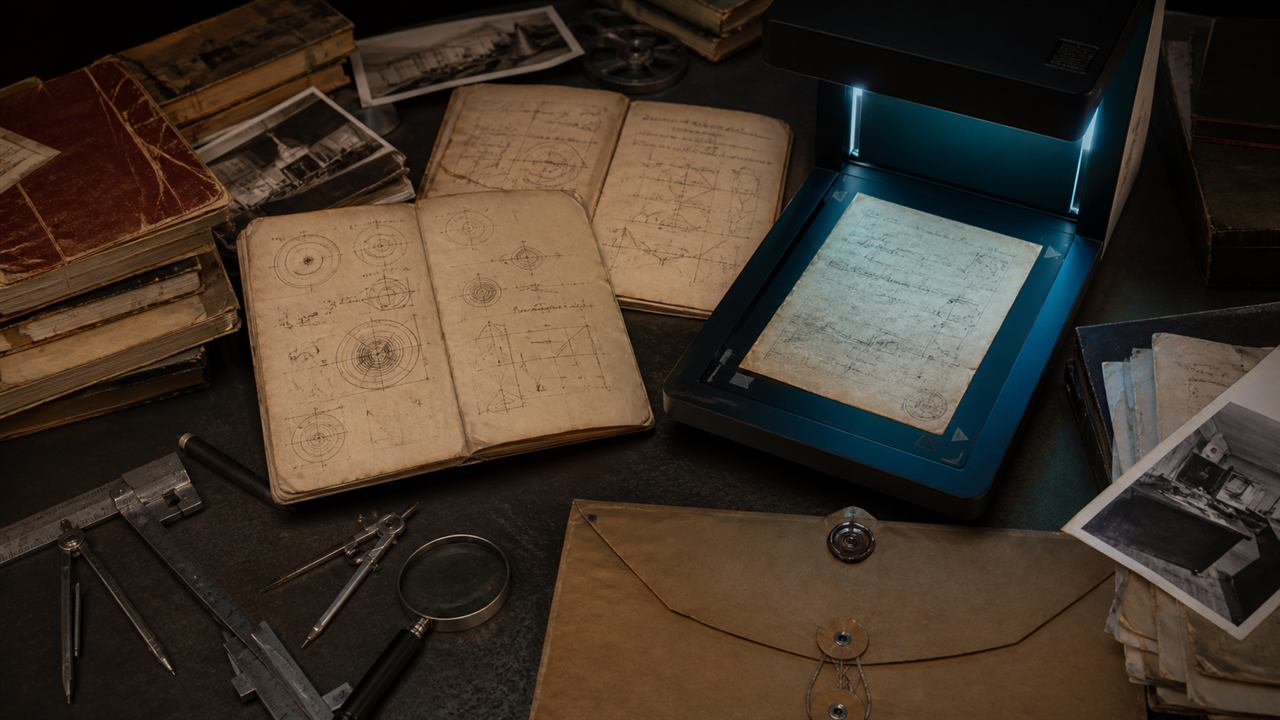
Project Unity posted an interview introducing a man known online as WhistlingMike and amplified a claim about 119 handwritten pages attributed to Soviet-Latvian aerospace engineer Valerijs Černohajev. The post says the papers contain twelve technical works and discusses claimed anomalous material and meetings in secure congressional spaces.
The claim is unusually specific. That is useful. A named author, a date of death, a page count, physical documents, and an alleged transfer to a daughter in the United States create multiple points that can be checked. They do not authenticate the papers by themselves.
Start with custody
Investigators should document who possessed the notebooks from the time they were written to the present. That includes photographs of bindings and page order, paper and ink examination, inheritance or shipping records, and a full inventory before any pages are separated for testing.
- 🛸 Verify Černohajev’s identity, education, employment, and aerospace assignments through independent records.
- 🛸 Date paper, ink, and annotations using non-destructive methods where possible.
- 🛸 Produce high-resolution scans of every page in original sequence.
- 🛸 Commission independent Latvian and Russian translations.
- 🛸 Separate original equations from later interpretation and UFO terminology.
- 🛸 Ask subject-matter experts to test whether the work is novel, coherent, or already known.
Equations are not experimental proof
Technical-looking pages can be historically interesting without describing a working propulsion system. A credible assessment needs dimensional consistency, stated assumptions, derivations, boundary conditions, and predictions that can be compared with experiment. If the notebooks refer to materials, devices, or measurements, those references should map to surviving artifacts or laboratory records.
The post’s mention of secure meetings also requires care. Entry into a SCIF can establish that a discussion occurred in a protected setting; it does not validate what was presented there. Meeting dates, sponsoring offices, attendees, and the materials entered into the record would help distinguish verified process from inferred endorsement.
Assessment: Editorially important because the claim identifies a finite documentary corpus that could be released and examined. Current confidence remains low until provenance, complete scans, independent translation, and technical peer review are available.